 Multi Fasteners
Types of valves: ball, gate, globe, butterfly and check
The main types of valves in piping are ball, gate, globe, butterfly and check valves. Each works differently, so each suits a different job: shutting off flow, throttling it, or stopping it running backwards. This guide covers the types of valves, the variants within each, and the comparisons buyers ask about most.
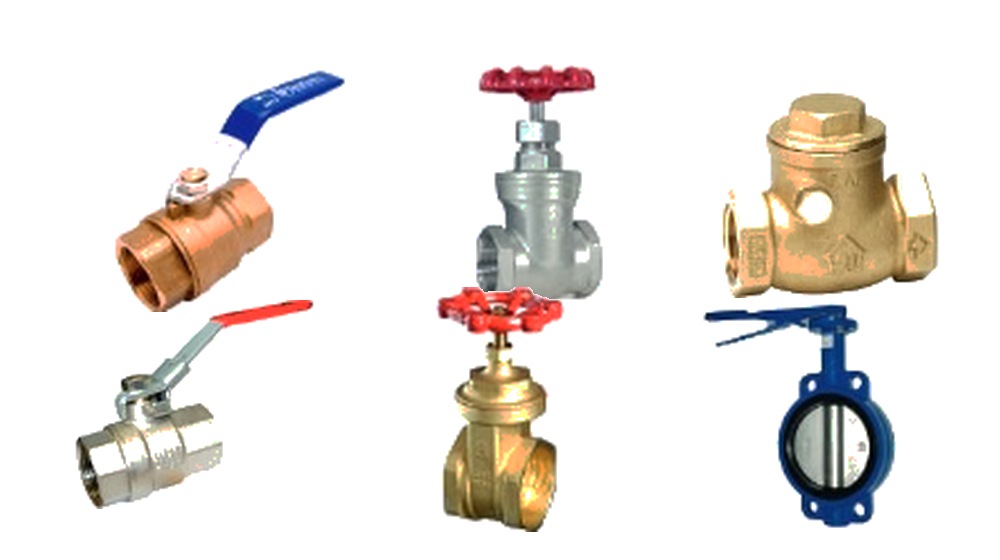
Types of valves at a glance
| Type | Operation | Main job | Throttling | Pressure drop when open |
|---|---|---|---|---|
| Ball | Quarter turn | Quick on/off isolation | Not recommended | Very low (full bore) |
| Gate | Multi turn | On/off isolation | No | Very low |
| Globe | Multi turn | Throttling and flow control | Yes | High |
| Butterfly | Quarter turn | Isolation and rough control in larger sizes | Limited | Low |
| Check | Automatic | Prevent backflow | No | Low to medium |
Ball valve types
A ball valve has a ball with a hole through it. A quarter turn of the lever lines the hole up with the pipe (open) or turns it across (closed). Ball valves are quick to operate, seal tightly and are the usual choice for small and medium isolation duties. Main variants:
- Full bore vs reduced bore: full bore matches the pipe bore for minimum pressure drop; reduced bore is one size smaller inside, lighter and cheaper.
- Body construction: one piece, two piece and three piece bodies. Two and three piece valves can be opened for seat replacement.
- Material: brass for water, air and general service; stainless steel for corrosive and marine duty; carbon steel for oil, gas and higher pressure.
- Ends: threaded male/female (M/F) or female/female (F/F), and flanged in larger sizes.
Ratings such as 600 WOG and 1000 WOG give the cold working pressure in psi for water, oil and gas. Do not use a ball valve partly open for long periods: the flow wears the soft seats.
Gate valve types
A gate valve lifts a wedge or gate fully out of the flow path. When open there is almost no restriction, so gate valves suit long runs where pressure drop matters. They are for fully open or fully closed duty only; half open, the gate vibrates and the seats erode. Main variants:
- Rising stem vs non-rising stem: a rising stem shows at a glance whether the valve is open; a non-rising stem needs less headroom.
- Wedge: solid wedge is simple and strong; flexible and split wedges cope better with thermal movement.
- Material: brass for small water lines, stainless steel for corrosive service, cast steel for oil, gas and higher pressure. API 600 covers flanged and butt weld steel gate valves; API 602 covers compact forged steel gate valves in small sizes.
- Knife gate: a thin sharp gate that cuts through slurry, sludge and solids.
Gate valve vs globe valve
From the outside they look alike, but inside they are very different. In a globe valve the flow turns through an S-shaped path and a disc closes down onto a seat. That makes it good for throttling and fine flow control, with a tight shut-off, at the cost of a higher pressure drop.
| Gate valve | Globe valve | |
|---|---|---|
| Best for | Full open or full closed isolation | Throttling and regulating flow |
| Pressure drop open | Very low | High |
| Flow direction | Either way | Marked on the body, install correctly |
| Seat wear | Wears fast if throttled | Designed for partial opening |
| Typical use | Main line isolation, water, oil | Steam, fuel and cooling water control, bypass lines |
Globe valve variants include the angle valve, where inlet and outlet are at 90 degrees, and the bellow seal globe valve, where a metal bellows seals the stem for steam, thermal oil and hazardous fluids where stem leakage is not acceptable.
Ball valve vs gate valve
- Speed: a ball valve closes in a quarter turn; a gate valve takes many turns, which also reduces water hammer on long lines.
- Sealing: soft seated ball valves give a very tight seal; gate valves seal well but can let by as seats wear.
- Size and weight: in large sizes gate valves are usually lighter and cheaper than ball valves.
- Temperature: metal seated gate valves handle higher temperatures than ball valves with soft seats.
As a rough rule: ball valves for small and medium lines that need quick, tight shut-off; gate valves for larger lines, higher temperatures and valves that are rarely operated.
Butterfly valve types
A butterfly valve turns a disc a quarter turn about its centre. It is short, light and economical in large sizes, which makes it common on water, cooling and seawater lines. API 609 covers butterfly valves. Smaller valves use a lever; larger ones use a gearbox.
Seat designs range from concentric resilient seated valves for water and general service, to double offset (high performance) and triple offset metal seated valves for higher pressure and temperature.
Butterfly valve wafer vs lug
| Wafer | Lug | |
|---|---|---|
| Body | Slim body clamped between two flanges | Threaded lugs around the body |
| Bolting | Long bolts pass from flange to flange | Each flange bolts to the lugs separately |
| End of line use | No | Yes, within the maker's rating |
| Removing pipe downstream | Line must be drained, valve loosens too | Possible with the valve kept in place |
| Cost and weight | Lower | Higher |
Check valve types
A check valve lets flow pass one way and closes on its own if flow reverses. Common check valve types:
- Swing check: a hinged disc swings open with the flow. Low pressure drop; best in horizontal lines.
- Inline (spring) check: a spring loaded disc or poppet closes quickly, works in any orientation and reduces slam.
- Lift check: a disc lifts off the seat, similar to a globe body; suits higher pressure and small sizes.
- Dual plate (wafer) check: two spring loaded half discs in a slim body between flanges.
- Foot valve: a check valve with a strainer, fitted at the bottom of a pump suction line to keep the pump primed.
Other valves in the range
Alongside the five main types we also stock needle valves for fine instrument control, Y-type strainers, safety relief valves, emergency shut-off valves, sounding cocks and mud boxes for marine use. See the full valves range.
Ordering: what to specify
To get a quote that matches first time, send these for each valve:
- Type: ball, gate, globe, butterfly, check or other
- Size: nominal bore, for example 1 in or 4 in
- Body material: brass, stainless steel, carbon steel or cast steel
- Ends: threaded, flanged (with class or PN), wafer or lug
- Pressure rating: for example 600 WOG, class 150 or PN16
- Medium and temperature: water, seawater, oil, gas or steam
For example: "Ball valve, 1 in, stainless steel, full bore, F/F threaded, 1000 WOG, seawater, 10 pcs." If you are unsure which type fits, tell us what the valve has to do and we will advise.
Valves in Dubai
We stock ball, gate, globe, butterfly and check valves in brass, stainless steel, carbon steel and cast steel, plus needle valves, strainers, safety relief valves and marine valves.