 Multi Fasteners
Weldolet vs sockolet vs threadolet: choosing a branch outlet
Weldolet vs sockolet comes down to how the branch pipe is joined: a weldolet takes a butt weld, a sockolet takes a socket weld and a threadolet takes a screwed pipe. All three are olet fittings, forged outlets welded onto a larger run pipe to make a branch connection without cutting in a full tee.
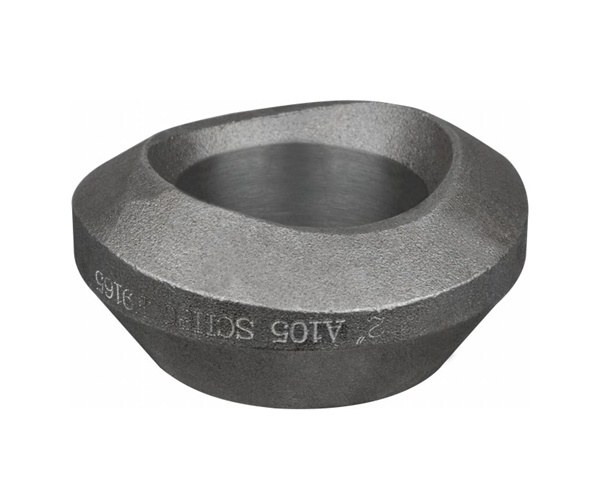
What an olet does
When a smaller line branches off a larger one, there are three common ways to make the branch connection: a reducing tee, a stub-in (the branch pipe welded straight into a hole in the run pipe, often with a reinforcing pad) or an olet. An olet is a forged fitting with a base shaped to the outside of the run pipe. It is welded onto the run over a hole cut in the pipe wall, and its thicker body replaces the metal removed for the hole. That is why olets are described as integrally reinforced.
MSS SP-97 is the standard that covers integrally reinforced forged branch outlet fittings with butt welding, socket welding and threaded ends. The base weld to the run pipe is the same for all three types; only the outlet end changes.
Weldolet vs sockolet vs threadolet at a glance
| Weldolet | Sockolet | Threadolet | |
|---|---|---|---|
| Outlet end | Bevelled for butt weld | Socket for fillet weld | Female thread (usually NPT) |
| Rated by | Schedule of the branch pipe (STD, XS, SCH 160) | Pressure class | Pressure class |
| Branch sizes | Small to large bore | Small bore | Small bore |
| Joint to branch | Full penetration butt weld | Fillet weld | Screwed, no weld on the branch |
| Inspection | Branch weld can be radiographed | Surface checks only | Leak check |
| Typical use | Process branches, high pressure and severe service | Small bore process and utility branches | Instruments, gauges, vents and drains |
Weldolet
A weldolet has a bevelled outlet, so the branch pipe is butt welded to it. The bore and wall are matched to the branch pipe schedule, so the flow path stays smooth and the weld can be fully inspected. Weldolets are the usual choice on high pressure, high temperature and critical lines, and they cover the widest size range of the three.
Weldolet dimensions (overall height, base width and bore) depend on the run size, the branch size and the schedule, and differ slightly between manufacturers. Each weldolet is made for a range of run pipe sizes, so the base sits correctly on the curve. Use the maker's dimension sheet when you need exact figures for a drawing.
Sockolet
A sockolet has a socket outlet: the branch pipe slides in and is fillet welded around the outside, the same as a socket weld fitting. It is used where the rest of the small bore piping is socket weld. Leave a small gap (about 1.5 mm) between the pipe end and the bottom of the socket before welding, so the weld does not crack as it cools.
Threadolet
A threadolet has a female threaded outlet. The branch is screwed in, so nothing needs welding at the branch end after the olet is fitted. Threadolets are common for pressure gauges, temperature probes, sampling points, vents and drains, where an instrument may need removing later.
Sockolet vs weldolet: how to choose
- Line size and service: for larger branches, or any branch on a high pressure, high temperature or cyclic line, use a weldolet.
- Inspection: if the specification calls for radiography of branch welds, only the weldolet gives a butt weld that can be radiographed.
- Matching the system: if the small bore branch piping is socket weld, a sockolet keeps one joining method and one welding procedure.
- Cost and time: a sockolet fillet weld is quicker than a butt weld and needs less fit-up.
Threadolet vs sockolet
Both are used on small bore branches. Pick a sockolet when the joint must be permanent and leak-tight, or when hot work on the branch is not a problem. Pick a threadolet when the branch carries an instrument or plug that may be removed, or when the branch end must be assembled without welding. Threads are a possible leak path, so on hazardous or high pressure lines many specifications prefer a sockolet, or a threadolet with a seal weld.
Other branch fittings
For small branches there are also simpler forged options in our high pressure range: the half coupling, the boss and the welding outlet. They are welded onto the run pipe in a similar way and suit lower duty branches. Other olet shapes exist for special cases, such as elbolets for elbows and latrolets for 45 degree branches.
Ordering: what to specify
Olets are described as run size by branch size, so send these for each one:
- Type: weldolet, sockolet or threadolet
- Run pipe size: the main line, for example 6 in
- Branch size: the outlet, for example 1 in
- Schedule or class: branch schedule for a weldolet; pressure class for a sockolet or threadolet
- Material: for example forged carbon steel
For example: "Weldolet, run 6 in, branch 2 in, SCH 80, forged carbon steel, 10 pcs." If you are unsure, send the line pressure and pipe schedules and we will advise.
Forged olets in Dubai
We stock Both-Well forged weldolets, sockolets and threadolets from Taiwan as part of our high pressure fittings range, along with half couplings, bosses and welding outlets.